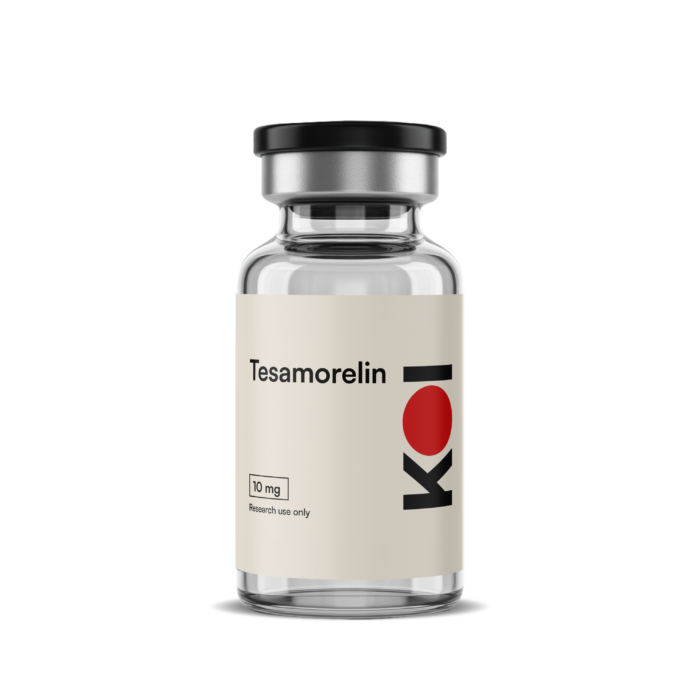
Tesamorelin GHRH Analog Research Peptide
GHRH(1-44) Analog · DPP-Resistant · Growth-Hormone Axis
Tesamorelin is GHRH(1-44) with a critical upgrade - an N-terminal trans-3-hexenoyl group that blocks dipeptidyl-peptidase cleavage and extends enzymatic half-life far beyond native GHRH or sermorelin.
Size: 10mg
3rd Party
Lab Tested
Fast 2–5
Day Shipping
COA
Publicly Available
CAS Number
218949-48-5
Molecular Weight
5135.90 g/mol
Native GHRH(1-44) and sermorelin both have the same problem: dipeptidyl-peptidase cleaves the N-terminus quickly, collapsing half-life in both plasma and assay conditions. If you're running extended GHRH receptor studies or GH-axis kinetic experiments, that instability limits what you can measure.
Tesamorelin (TH9507, CAS 218949-48-5) solves this - a synthetic GHRH(1-44) analog with an N-terminal trans-3-hexenoyl modification that confers resistance to DPP cleavage. The result is markedly greater enzymatic stability than either sermorelin (GHRH 1-29) or native GHRH(1-44). MW 5135.90 g/mol, formula C221H366N72O67S.
The compound binds GHRH-R on pituitary somatotrophs and stimulates GH synthesis and pulsatile release through the Gs/adenylyl-cyclase/cAMP pathway - preserving the physiological pulsatile GH pattern that direct GH administration cannot replicate. It is the reference long-acting GHRH analog in endocrinology research and the active ingredient in FDA-approved Egrifta.
We supply Tesamorelin at ≥99% HPLC purity in a 10mg lyophilized vial with a lot-specific COA. For in vitro laboratory research use only.
Key Takeaways
Key Scientific Specifications
Research-Referenced Attributes
Based on published preclinical and clinical literature; not therapeutic claims. For laboratory research use only.
Related Compounds
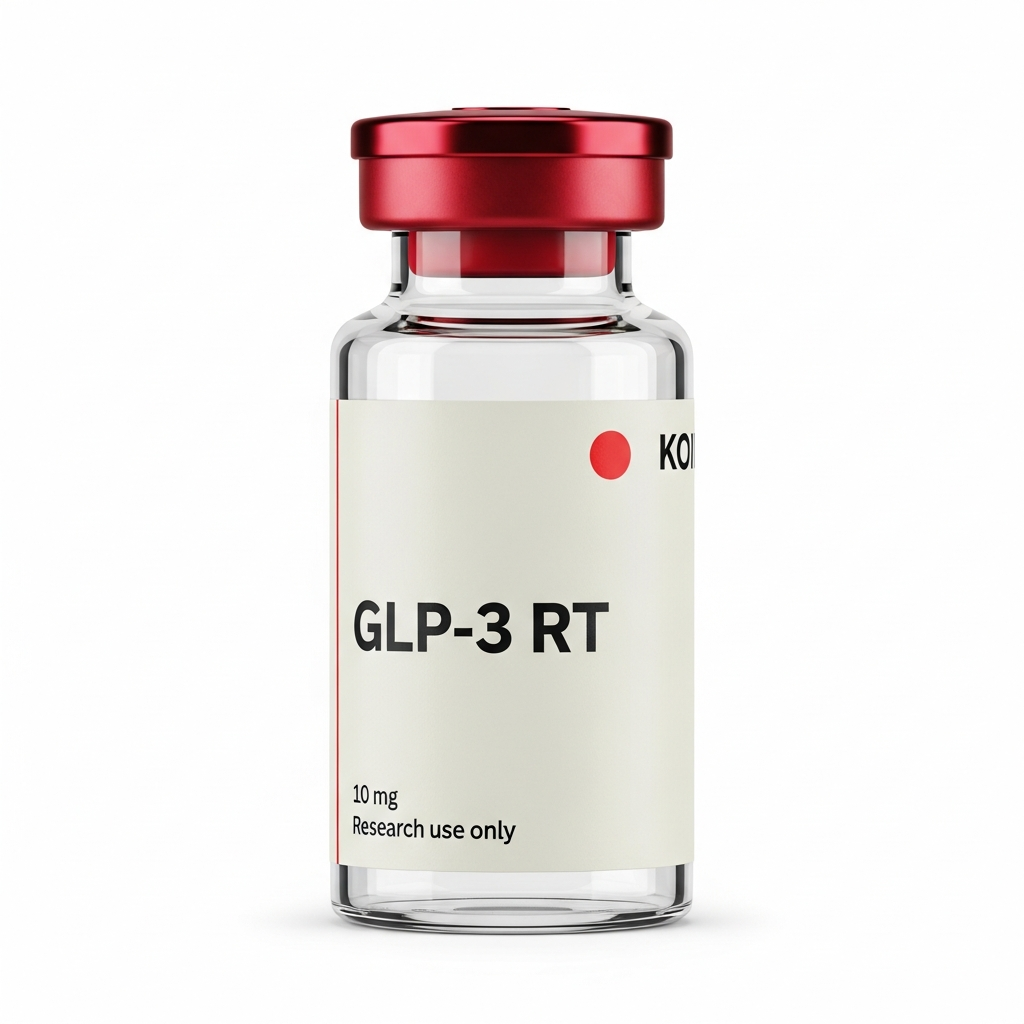
GLP-3 RT
Single and dual GLP-1 agonists leave GCGR activation on the table. GLP-3 RT (Retatrutide) hits all three - GLP-1R, GIPR, and GCGR - the only way to model true triple-receptor crosstalk.
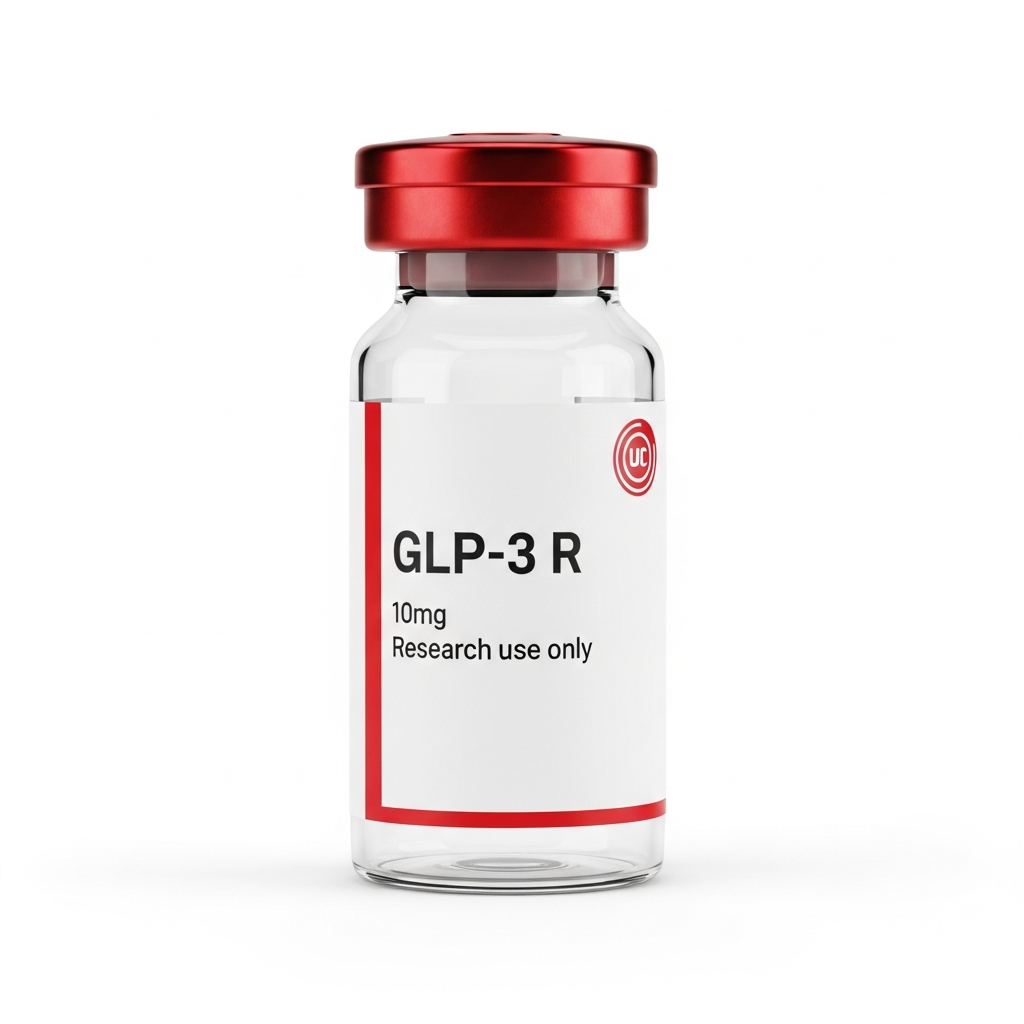
GLP-3 R
GLP-3R is the lipidated variant - a 39-amino-acid GLP-1R/GIPR/GCGR triagonist with a fatty acid conjugate that extends half-life and alters receptor-binding kinetics vs. unlipidated analogs.