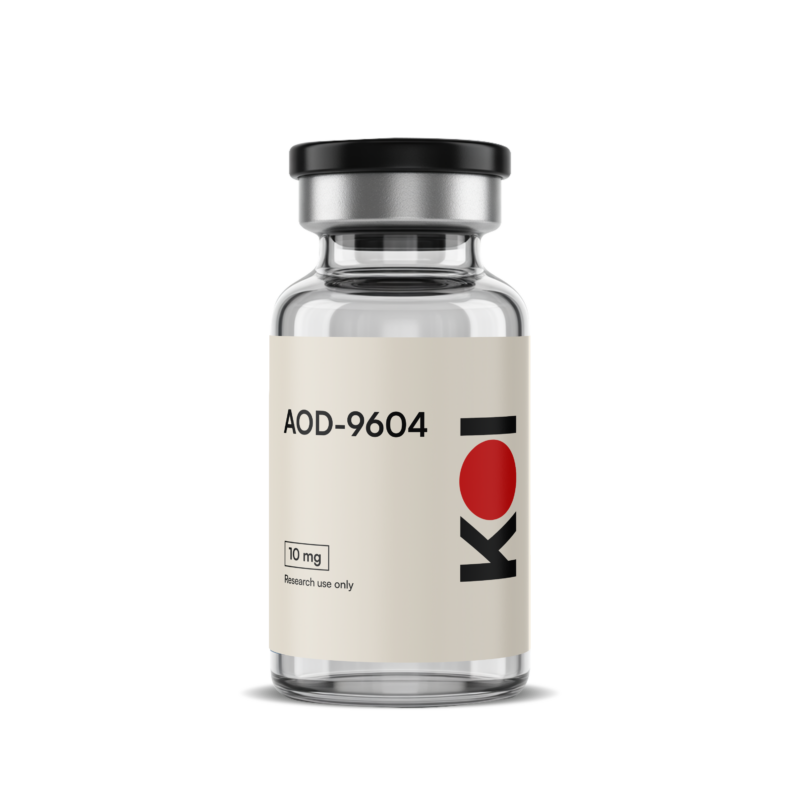
AOD-9604 hGH Fragment 176-191 Research Peptide
hGH Fragment 176–191
AOD-9604 isolates the lipolytic region of hGH - the 16-amino-acid C-terminal fragment (176–191) that activates β3-adrenergic signaling without touching the GH receptor or IGF-1.
Size: 10mg
3rd Party
Lab Tested
Fast 2–5
Day Shipping
COA
Publicly Available
CAS Number
221231-10-3
Molecular Weight
1815.12 g/mol
Full-length hGH activates the GH receptor and drives IGF-1 - which is exactly what you don't want when you're studying lipolysis in isolation. The two signaling pathways are inseparable in native hGH. AOD-9604 solves that problem.
AOD-9604 is a 16-amino-acid synthetic fragment of human growth hormone (residues 176–191) with an N-terminal tyrosine modification that improves proteolytic stability. It activates the β3-adrenergic receptor pathway - driving adipocyte lipolysis, free fatty acid release, and fatty acid oxidation - without engaging the classical GH receptor and without stimulating IGF-1. That clean separation is what makes it the reference compound for isolating the lipolytic mechanism in GH-class research.
We supply AOD-9604 at ≥99% HPLC purity as lyophilized powder. CAS 221231-10-3, MW 1815.12 g/mol, Cys7–Cys14 disulfide bond intact - verified by LC-MS. Lot-specific COA includes HPLC, LC-MS, and endotoxin. For in vitro laboratory research use only.
Key Takeaways
Key Scientific Specifications
Research-Referenced Attributes
Based on published preclinical and clinical literature; not therapeutic claims. For laboratory research use only.
Also in This Research Area
Researchers working with AOD-9604 frequently also order MOTS-c mitochondrial peptide for parallel energy expenditure and metabolic signaling research, and GLP-2 TZ (tirzepatide-class) for GLP-receptor agonist comparison against β3-adrenergic models. Both are available as lyophilized research-grade peptides on the Koi Aminos research peptide marketplace.
Related Compounds
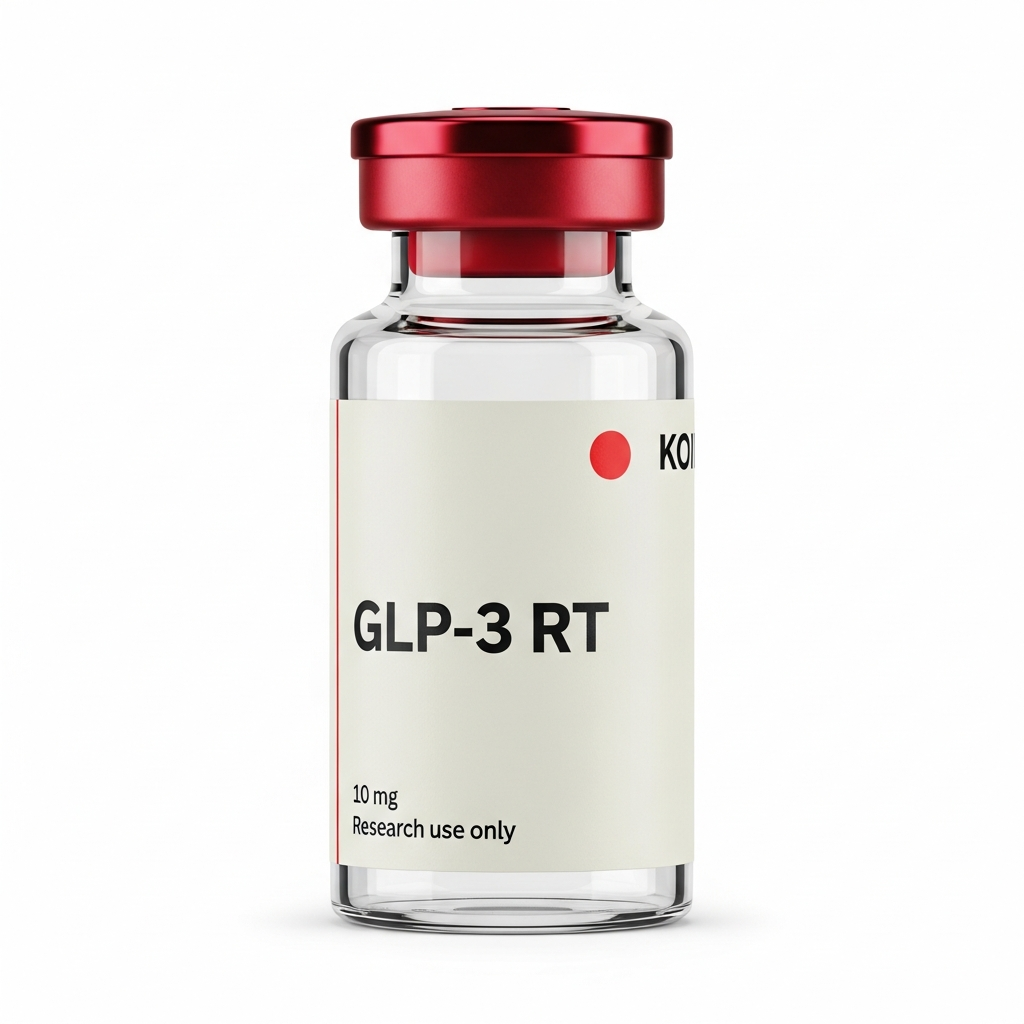
GLP-3 RT
Single and dual GLP-1 agonists leave GCGR activation on the table. GLP-3 RT (Retatrutide) hits all three - GLP-1R, GIPR, and GCGR - the only way to model true triple-receptor crosstalk.
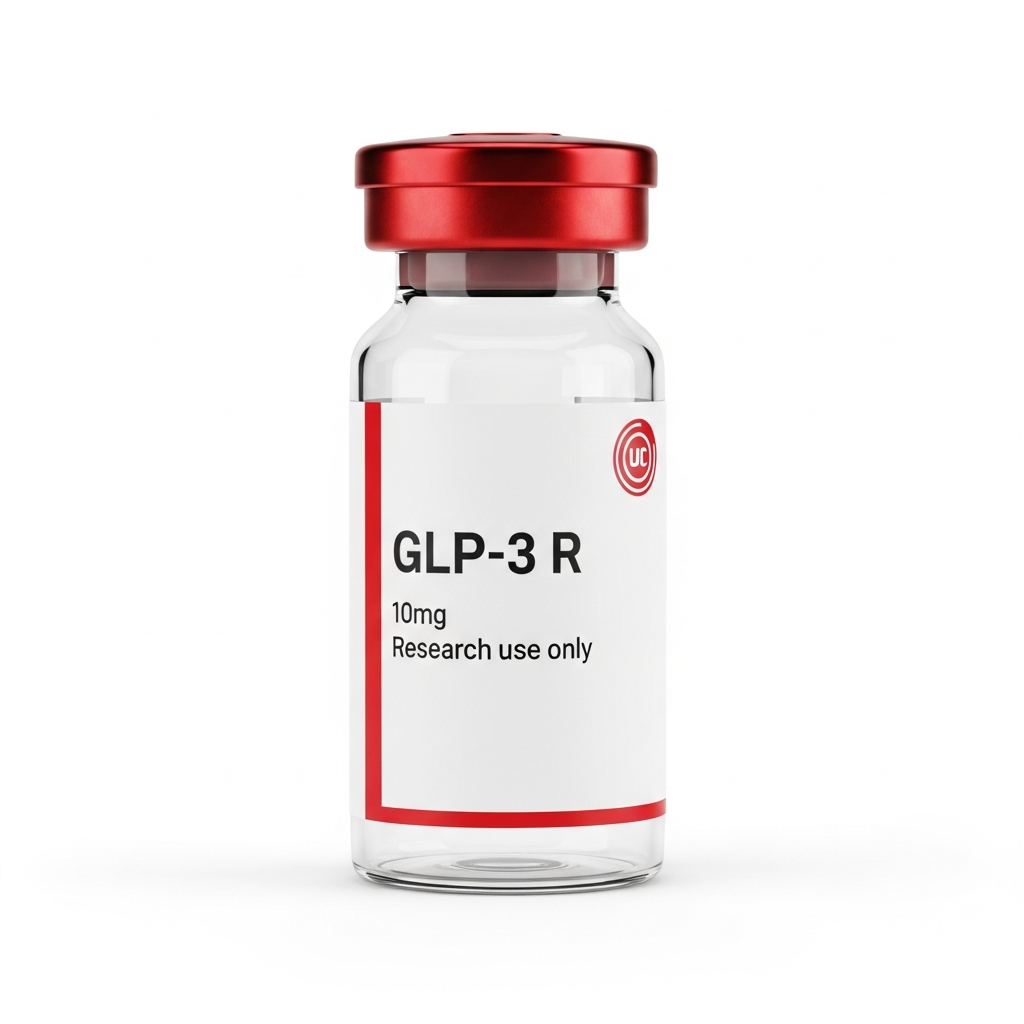
GLP-3 R
GLP-3R is the lipidated variant - a 39-amino-acid GLP-1R/GIPR/GCGR triagonist with a fatty acid conjugate that extends half-life and alters receptor-binding kinetics vs. unlipidated analogs.