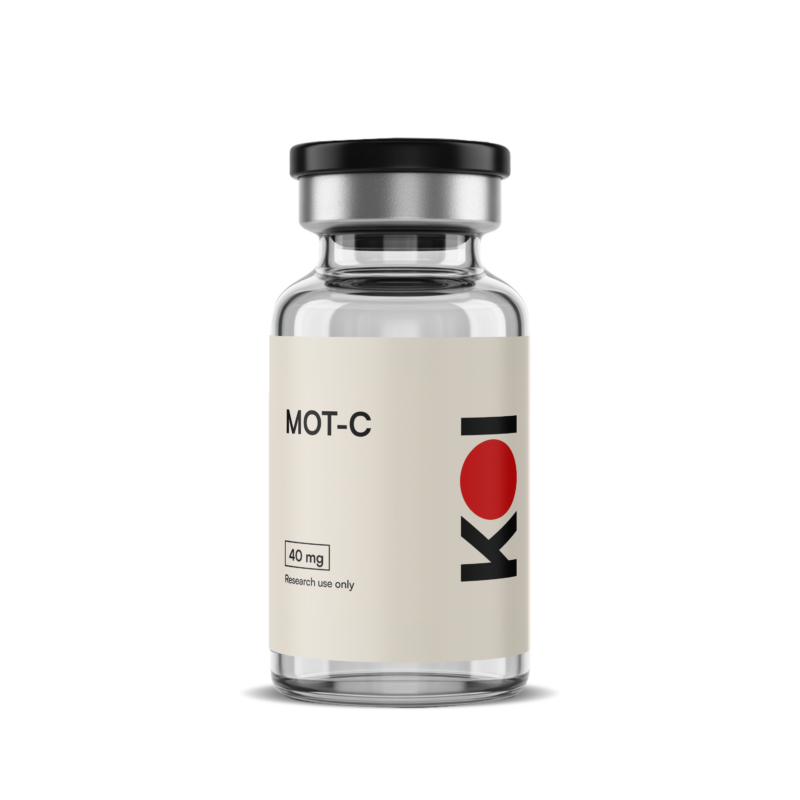
MOTS-c Mitochondrial-Derived Peptide Research Compound
Mitochondrial Peptide · AMPK · Retrograde Signal
MOTS-c is the only research peptide encoded in mitochondrial DNA - a 16-amino-acid retrograde signal that translocates to the nucleus under metabolic stress to activate AMPK and regulate skeletal muscle glucose uptake.
Size: 10mg
3rd Party
Lab Tested
Fast 2–5
Day Shipping
COA
Publicly Available
CAS Number
1627580-64-6
Molecular Weight
1817.10 g/mol
Every other research peptide in this catalog is synthetic by design. MOTS-c is different - it is a signal your own mitochondria already produce. The research challenge is isolating it for in vitro work, which requires a synthetic version that matches the endogenous sequence exactly.
MOTS-c is a 16-amino-acid mitochondrial-derived peptide (MDP) encoded within the 12S rRNA gene of mitochondrial DNA. It is one of the only known retrograde signals that translocates from mitochondria to the nucleus under metabolic stress, where it activates AMPK, improves skeletal muscle glucose uptake, and modulates mitochondrial-nuclear communication. Multiple published cohort studies show circulating MOTS-c declines with age - establishing it as both a research tool and a biomarker reference in aging biology.
We supply MOTS-c at ≥99% HPLC purity in 10mg and 40mg vials. CAS 1627580-64-6, MW 1817.10 g/mol. Note: two methionine residues in the sequence are oxidation-sensitive - see storage guidance. For in vitro laboratory research use only.
Key Takeaways
Key Scientific Specifications
Research-Referenced Attributes
Based on published preclinical and clinical literature; not therapeutic claims. For laboratory research use only.
Also in This Research Area
Researchers working with MOTS-c frequently also order AOD-9604 hGH fragment for complementary metabolic pathway research, and GLP-3 RT triple-receptor agonist for incretin and mitochondrial signaling cross-pathway models. Both are available as lyophilized research-grade peptides on the Koi Aminos research peptide marketplace.
Related Compounds
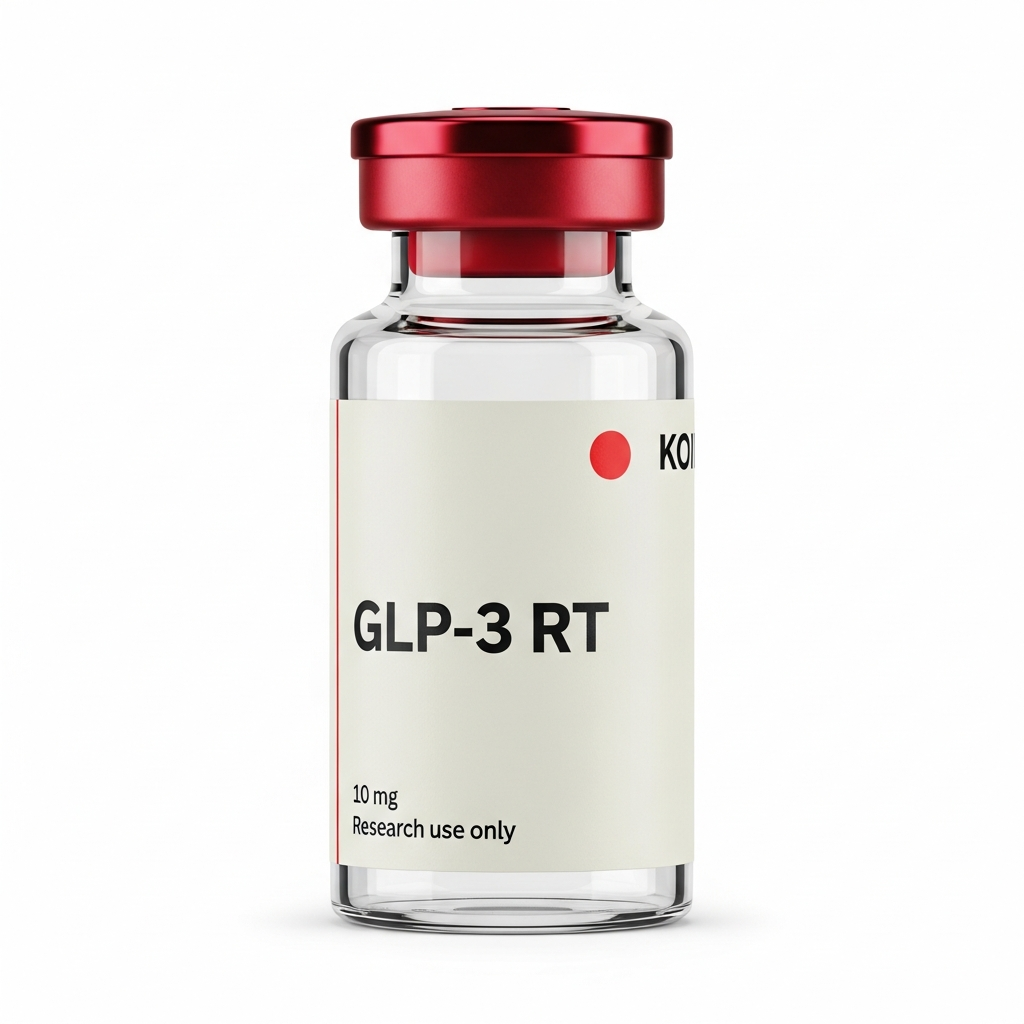
GLP-3 RT
Single and dual GLP-1 agonists leave GCGR activation on the table. GLP-3 RT (Retatrutide) hits all three - GLP-1R, GIPR, and GCGR - the only way to model true triple-receptor crosstalk.
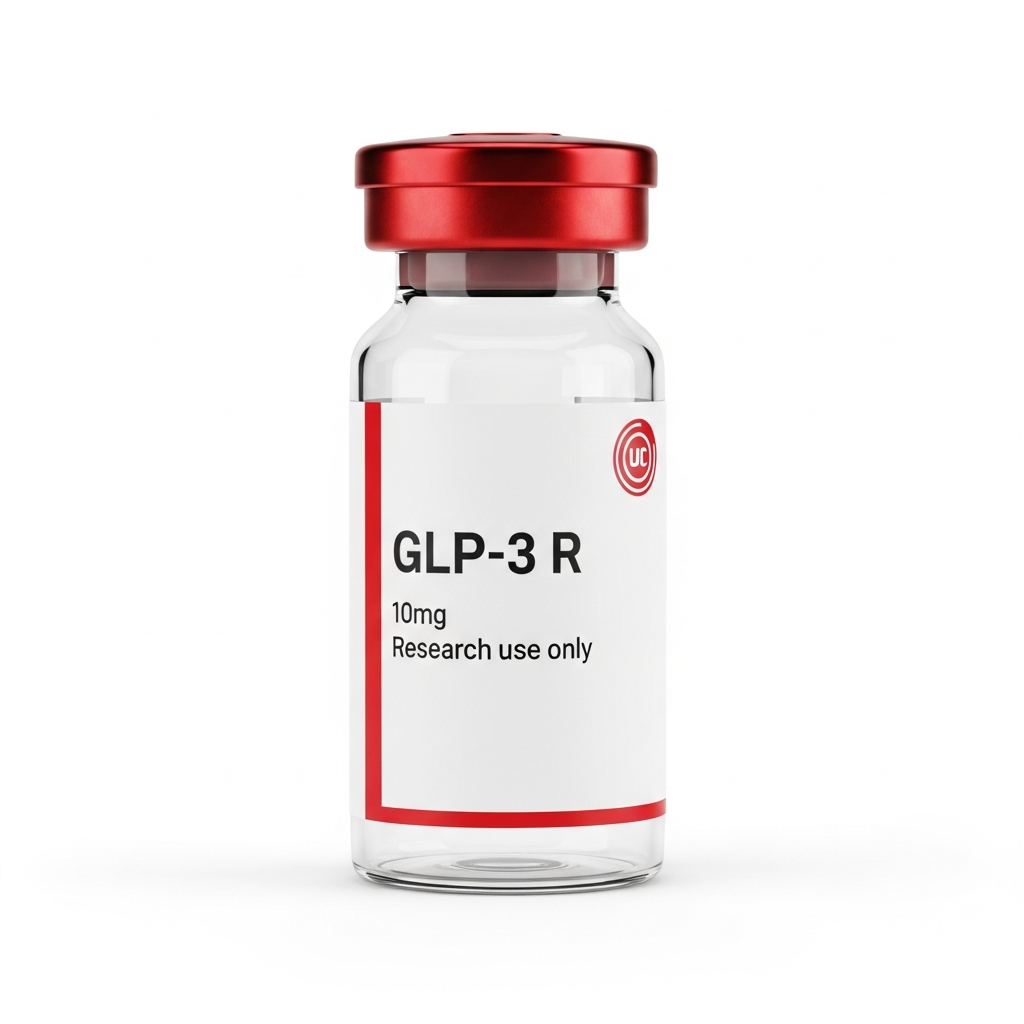
GLP-3 R
GLP-3R is the lipidated variant - a 39-amino-acid GLP-1R/GIPR/GCGR triagonist with a fatty acid conjugate that extends half-life and alters receptor-binding kinetics vs. unlipidated analogs.